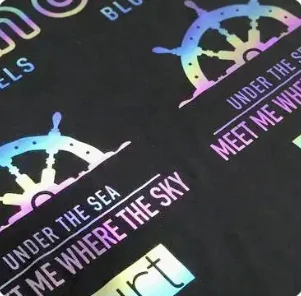
Custom T-Shirts: Screen Printing, Embroidery and Private Label
Decoration is chosen for the artwork, the quantity and the fabric — not for taste. A one-colour logo on 500 tees and a photo on 20 tees are different processes with different costs, and picking the wrong one either doubles the price or ruins the print. This page sets out the six methods we run, what each one is good at, and the four attribute scales every order is built on.
Send the weight, colour, fit and quantity. We return a unit price per quantity tier within 24 hours.
Decoration methods
6
Base fabric
160–350 gsm
MOQ
100 pcs
Lead time
Sample 7–10 days
Chosen by artwork, quantity and fabric
The single most useful question at the start of a custom order is not which method looks best — it is what the artwork physically is. Flat spot colours, a photograph, a line drawing, metallic foil and a raised patch all take different routes through the shop, and two of them cannot run on the same fabric.
Quantity decides the rest. Every process carries a setup cost that has to be spread over the run: a screen, a digitised file, a transfer sheet, a pre-treatment. Below a certain quantity the setup dominates and the per-piece price stops being a price and becomes a fee. Above it, the process with the lowest setup wins.
Fabric matters more than most buyers expect. A 160gsm jersey stretches under a heavy ink deposit; a 350gsm garment-dyed body shrinks and relaxes in ways that move a print. We fix the weight before the decoration, not after.
The six methods we run
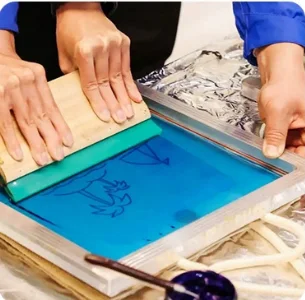
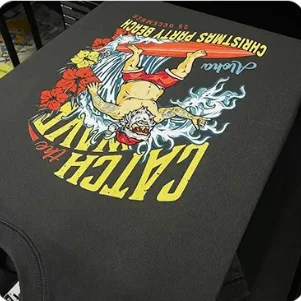
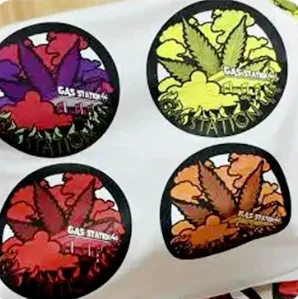
Screen printing is the workhorse for one to four spot colours. Ink is pushed through a mesh screen, one screen per colour, then cured. It is the cheapest per piece above roughly fifty units and the most durable finish on cotton. It cannot reproduce a photograph, cannot do gradients, and every extra colour adds a screen and a setup.
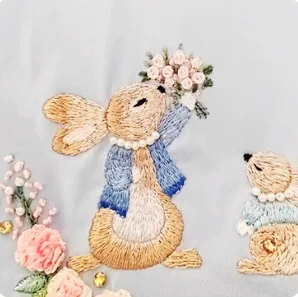
Embroidery is the choice for logos that have to survive industrial washing. Thread sits on top of the fabric, so it outlasts any print. On knit fabric it needs backing to stop the garment puckering, and detail below about 2 mm is lost — a logo designed for print usually has to be redrawn for embroidery.
DTG, direct to garment, prints with water-based ink straight into the fabric. No screens and no setup, so it is the right answer for short runs and photographic artwork. On dark colours it needs a pre-treatment and a white underbase, which is why a dark DTG print sits slightly heavier and can fade faster than a screen print.
Heat transfer covers two different things here. A standard transfer prints a full-colour design onto a carrier film and presses it onto the shirt: no setup, any artwork, but a flatter hand feel and a per-piece cost that does not fall with quantity. Reflective transfer is the same route with retroreflective film, used for high-visibility panels on sportswear and streetwear.
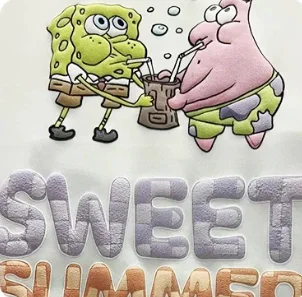
Puff transfer uses an expanding ink in the same film process, so the design sits about 0.5–1 mm proud of the fabric. It is a texture rather than a print, and it is deliberately limited: fine lines fill in, so a puff design has to be bold and simple.
Vinyl heat transfer is the simplest route of all: cut letters and numbers from coloured film and press them. It is how names and squad numbers get onto a shirt when the rest is screen printed. There is no setup beyond the cut file, so it costs the same per piece at ten units or a thousand.
The four attribute scales every order is built on
Every style is described on four scales, and each one is a decision the buyer makes, not a property of the factory. They are the vocabulary of the spec sheet, so it is worth agreeing on them before the first sample.
Fit runs slim, standard, slightly loose or loose. This is a pattern decision: it moves chest width, shoulder drop and body length together, and it cannot be adjusted once the fabric is cut.
Thickness runs thin, medium, thick or extra thick, and it is tied to fabric weight. A 160gsm tee is thin whatever is done to it; a 350gsm tee is extra thick and feels stiff until the first wash.
Stretch runs from none through slight to stretch and high stretch. It is a property of the knit, not the decoration. Adding elastane changes drape, recovery and the way a print behaves when the shirt is pulled on.
Softness runs soft, medium, firm or hard. Garment washing, enzyme treatment and yarn type all move this number. It is the attribute buyers notice first and describe worst, which is why it is a four-point scale rather than an adjective.
White tees with decoration
White is the most common base for decoration and the least forgiving: every shading in the print shows, and an off-white blank reads as a mistake next to a true white one. We keep five whites distinct on purpose — optic white, natural, ivory, off-white and cream — because a print approved against one of them looks wrong against another.
Not every white tee order is a production run. A printer who needs two hundred white tees decorated next week, or a brand adding a small embroidered drop to a style already on the shelf, is served from stock: pick a white blank, add the decoration, ship. Small decorated white runs are not the core of what we do, but they are the reason a customer can place a 100 piece decorated order at all instead of the 3,000 the factory minimum would otherwise demand.
Above roughly 10,000 pieces the economics flip back to a factory order: the blank is made to your weight and fit, the white is dyed to a reference, and the decoration runs on the same line.
How decoration is priced
Decoration is quoted with the order, not from a list. Three things move the number: the artwork (how many spot colours, or whether it has to be a photographic process), the print area (an A4 front is not a full back), and the quantity, because the setup has to be spread across the run.
Send the file and the quantity and we come back with a per-piece figure for each method that could run, so the comparison is like for like instead of comparing a screen-print price against a transfer price for different artwork.
What a print price actually consists of
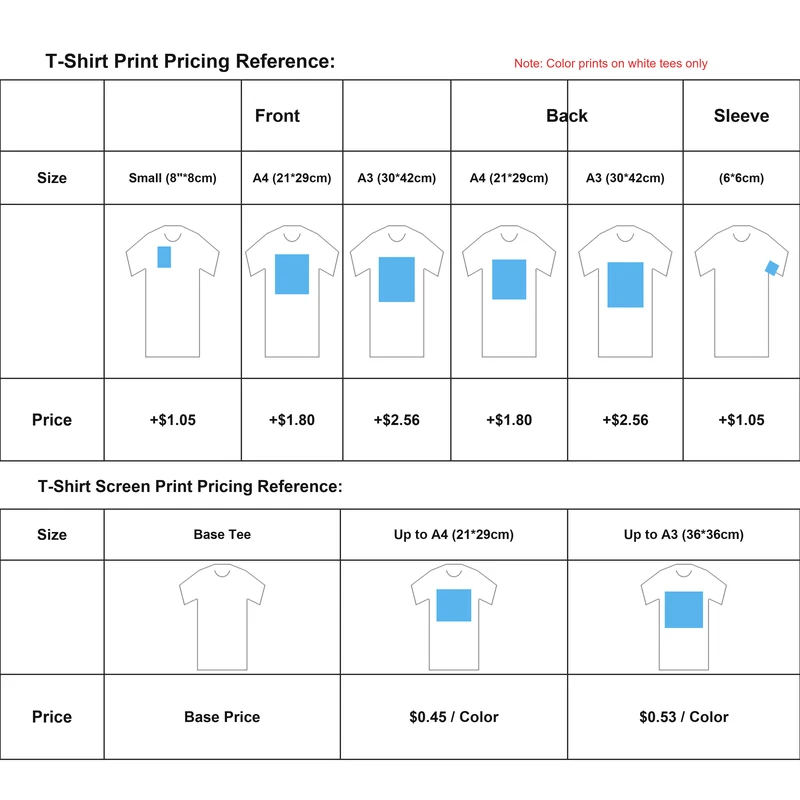
Standard screen print price reference. One screen per colour, one setup charge per screen, and the per-piece cost falls as the run gets longer.
The table above is the reference we quote screen print from, and it covers conventional screen printing only — plastisol or water-based ink pushed through a mesh screen, one screen per colour, typically one to four spot colours. It is not a price for DTG, heat transfer, puff, foil or embroidery; those are different processes with different cost structures, and they are quoted per job.
Read it in this order. Find the row for the quantity you are actually ordering, because that is the first thing that changes the number — a screen costs the same whether you print 50 shirts or 500, so at 50 the setup is a large share of each shirt and at 500 it almost disappears. Then count the colours in the artwork: every additional colour is another screen, another setup and another pass through the press, which is why a three-colour design is not three times a one-colour design but is never as cheap as it looks on paper.
Three things are deliberately not in the table, and they are the three that turn a print quote into a landed cost:
The blank. The garment is priced separately. A $3.55 tee and a $6.90 tee with the same print are different products at the same decoration cost.
Freight and duty. Where the goods ship from decides this, not the print method.
Artwork preparation. Spot-colour separations for screen print are usually included for simple logos and charged for complex ones. Ask before assuming.
The practical decision the table should drive is not “how cheap can the print get” but “is this design worth four screens”. Below a few dozen pieces, screen print rarely makes sense at all — the setup dominates. Above a few hundred, it is the cheapest durable option on cotton by a wide margin. If the artwork is photographic or has more than four colours, the right answer is on the DTG page, not on this one.
Where your logo goes
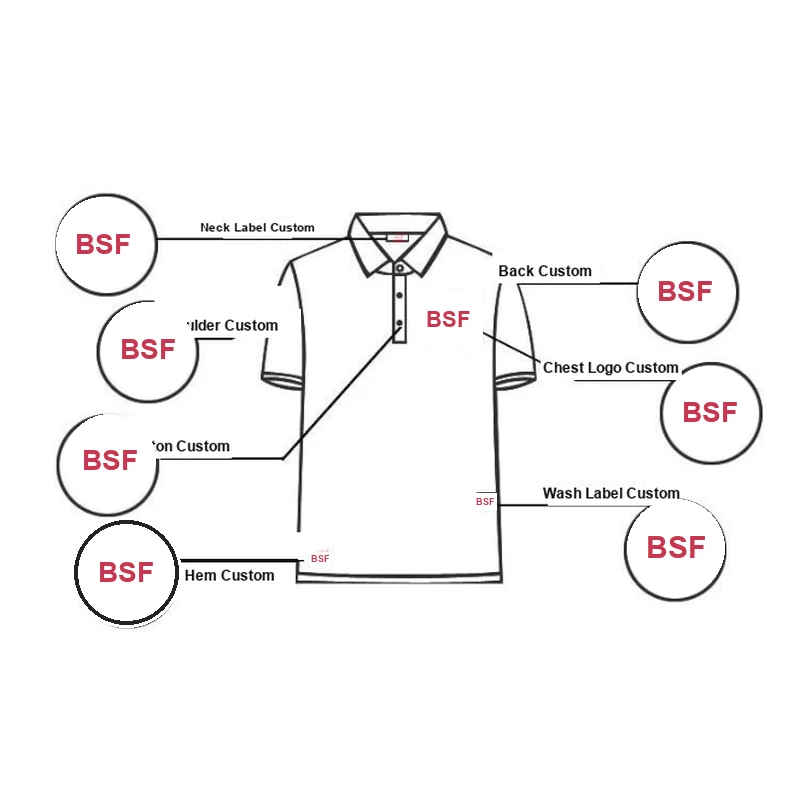
Standard logo placements. Position and print area are quoted separately, because a full back print uses several times the ink of a left-chest logo.
The diagram shows the placements we price most often. What matters is not which one looks best on a mock-up — it is that the same artwork behaves differently in each position:
Left chest — roughly 3.5–4 inches wide. The cheapest credible branding, and the one that survives the most washes, because the print sits on a flat area of the garment. On very fine jersey it can pucker if the ink deposit is heavy.
Full front — around 10–12 inches wide, starting about 3 inches below the collar. More ink, more cost, and the placement has to clear the neckline on a deep scoop or V.
Full back — the largest area and the highest ink cost. Avoid crossing a back yoke seam: a print that runs over it will crack along the seam line first.
Sleeve — about 2.5–3 inches. Cheap, and the usual way to add a second brand mark without paying for a back print. On a raglan sleeve there is no flat panel, so the print distorts at the seam.
Two rules that save money and disappointment. First, one large placement plus one small one reads as more branded than three medium ones, and costs less. Second, scale the artwork to the garment: a 12-inch back print on a youth size is out of proportion before it is printed, and no amount of colour correction fixes it.
Send artwork as vector at the size you want it printed, positioned where you want it. We return a print-proof showing the exact area and position on the garment before anything goes to press — approving a design on a screen proves nothing about how it sits on a body.
Screen print · embroidery · DTG · heat transfer · puff transfer · reflective transfer
Colours per screen print
1–4 spot colours (more possible, each adds a screen)
Print placement
Front, back, left chest, sleeve, hem, neck label
Private label
Woven neck label, printed care label, hang tag, poly bag
MOQ
100 pieces per style and colour
Sample
7–10 days, including a print strike-off
Bulk
25–35 days after sample approval
Screen printing
One screen per spot colour
Embroidery
Thread on top, survives washing
DTG
No screens, photo-real
Heat transfer
Full colour film, no setup
Puff transfer
Raised 0.5–1 mm texture
Reflective transfer
Retroreflective film
Frequently asked questions
Which decoration method is cheapest?
Screen printing, above roughly fifty pieces, for one to four spot colours. Below that the setup cost per screen dominates and DTG or heat transfer is usually cheaper per piece.
Can you print a photograph on a t-shirt?
Yes, with DTG or a standard heat transfer. DTG prints into the fabric and feels softer; heat transfer sits on top, holds more saturated colour and feels flatter. Screen printing cannot reproduce a photograph.
Do you do private label?
Yes. Woven neck labels, printed care labels, hang tags and poly bags are sourced and attached on the same production run, so the shirt arrives shelf-ready instead of needing a second trip.
What is the minimum for a decorated order?
100 pieces per style and colour. Sizes can be mixed freely inside one colour, so a size curve still meets the minimum.
Can I order white tees from stock and have them decorated?
Yes, for small decorated white runs. Pick a white blank from the in-stock styles, add screen printing or embroidery, and it ships from the US warehouse. Above about 10,000 pieces a factory order is cheaper and far more flexible.
What are the four attribute scales?
Fit (slim, standard, slightly loose, loose), thickness (thin, medium, thick, extra thick), stretch (none, slight, stretch, high stretch) and softness (soft, medium, firm, hard). They are agreed before the first sample and stated on the spec sheet.
Send the spec — quote in 24 hours
A fabric swatch and a sewn sample come before the bulk run, and finished goods are photographed before packing.